
In our motherland, the story of art galleries reflects the nation’s shifting cultural identity, from its indigenous roots to its modern, globalized art scene. What began as artistic expression intertwined with daily life has evolved into a dynamic network of galleries, museums, and alternative spaces that continue to shape Filipino creativity and public appreciation for art.
In this #GenesisRead special, we’ll go through the history of national museums and galleries as MGM draws to a close.
Going Back to the Roots
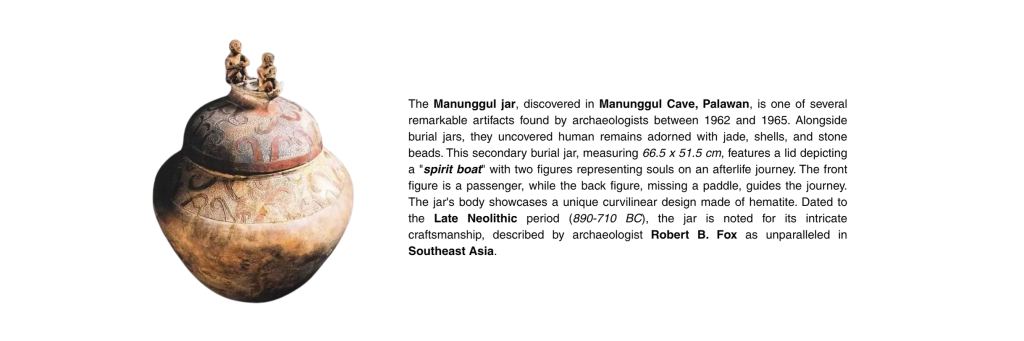
During the pre-Hispanic period, art was created for practical use, worship, and storytelling, rather than for display. Anitos, pottery, textiles, tattoos, and jewelry served both religious and social purposes, as well as fulfilling functional needs. These art forms were integrated into daily life, as they were objects to be worn, traded, and utilized in various ways. As a result, there was no need for a formal venue to showcase them. The closest approximation to a gallery was the trading space, where crafted goods were bartered and appreciated for their utility and craftsmanship.
The arrival of the Spaniards in the 16th century introduced new concepts of art and patronage, though. Churches became the earliest “proto-galleries,” filled with paintings, sculptures, and engravings commissioned by friars and executed by local and Chinese artisans. These works, however, were primarily religious and subject to censorship. It is known that artistic expression was confined to the service of Catholic worship, with the church serving as the country’s central art institution. Outside the church, workshops such as those in Manila’s Parián district acted as early venues for commissioned art, laying the groundwork for later commercial galleries.
At the turn of the 20th century, the American occupation ushered in modernization and the establishment of the country’s first formal exhibition spaces. Institutions such as the National Museum, the Philippine Vistas Gallery, and the University of Santo Tomas Museum’s Art Gallery marked the beginning of organized art presentation. During this era, art remained conservative, evidently dominated by genre scenes and landscapes that appealed to American officials and tourists. It’s when Fernando Amorsolo rose to prominence with his idyllic depictions of rural life, setting the tone for what was considered “Filipino art” for decades. Yet, when modernist Victorio Edades introduced a new visual language that defied Amorsolo’s romanticism, his works ignited debate and highlighted the lack of venues open to modern art. His efforts, though initially rejected, planted the seeds of modernism that would later transform Philippine art.
The Rebuilding Years
Following World War II, as the Philippines was recuperating from devastation, the demand for art resurged. Decorations were a necessity in new buildings, offices, and homes, which led to the rise of commercial art galleries in Manila, primarily along Mabini Street. From then, the founding of the Art Association of the Philippines (AAP) in 1948 occurred, providing artists with a platform to exhibit and promote their masterpieces.
The AAP became a cornerstone for art education and appreciation, hosting annual exhibitions and competitions that encouraged both traditional and modern art. Around this time, the Philippine Art Gallery (PAG) became a vital space for the modernist movement, nurturing artists like Hernando Ocampo, Vicente Manansala, and Jose Joya. PAG also led creative strategies, such as installment payments and rent-a-painting schemes, that made art collecting more accessible to the public.
The 1960s were a time of institutional growth and cultural expansion. Both private and government initiatives contributed to the rise of numerous galleries. By the end of the 1970s, Manila boasted over thirty art galleries and several major museums, establishing itself as a regional cultural hub, despite the declaration of Martial Law under Ferdinand Marcos’ regime.
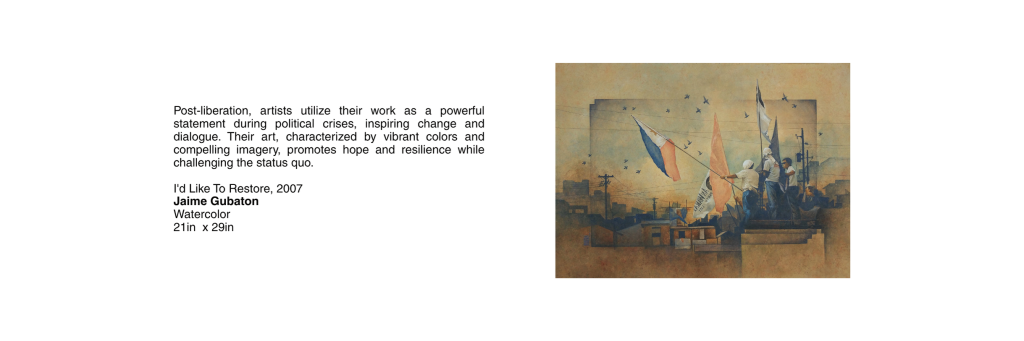
The economic and political crises of the 1980s, however, shifted artistic expression toward socio-political themes. Following the assassination of Benigno Aquino Jr. in 1983, art became a tool of resistance. Protest murals, performance art, and street installations reflected national unrest. While fewer galleries opened during this time—among them Finale Art File, Galerie Duemila, and Gallery Genesis—artists continued to create, often outside formal venues. The 1986 People Power Revolution brought new freedoms but also economic challenges that limited the growth of art institutions. Still, spaces for creatives signaled resilience and renewal.
As the years passed, the economy, too, recovered. This marked a revival of artistic activity in the Philippines in the 1990s, which saw the establishment of the National Commission for Culture and the Arts (NCCA) in 1992 and the presidential proclamation of October as Museums and Galleries Month (MGM), highlighting the significance of cultural institutions.
Up to this day, October is dedicated to celebrating our Filipino heritage through art, cultural history, and faith. MGM highlights that honoring these institutions recognizes their role in shaping national identity and sustaining community legacies. Museums and galleries, after all, are dynamic spaces for learning and dialogue, vital for nation-building. This celebration not only encourages Filipinos to connect with their roots but also affirms the culture’s importance for remembering the past and forging a future rooted in pride and purpose.
Remaining Pioneers
The year is 2025. A lot has changed since Filipinos had either no access to art or the means to create something considered such. Today's art scene includes diverse offerings, too. The continued growth of online galleries and virtual exhibitions, alongside the rise of biophilic art with its nature-first aesthetics, has expanded the styles and forms of art available for experience and consumption.
Despite these changes, art galleries remain crucial bridges between artists and audiences. On the surface, these institutions, like one of the pioneering art galleries in the Philippines— Gallery Genesis, continue to host exhibitions, champion local artists, and facilitate art sales to collectors and museums.
Moreover, Gallery Genesis, through Mrs. Araceli ‘Chichi’ Salas's advocacy for Filipino artists, has consistently ensured a progressive and nurturing environment within the art community. The gallery achieves this by enhancing culturally rich narratives and elevating the art experience for both artists and enthusiasts.
Living up to its promise, "For those who appreciate quality, from those who insist on it," Gallery Genesis actively supports and enriches local artists in their artistic journeys and self-expression.
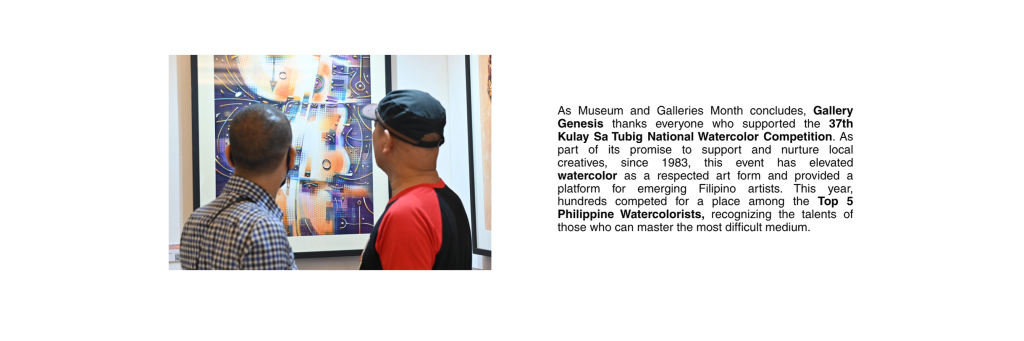
Skip the search for a "gallery near me" and visit Gallery Genesis at the 2/F North Wing of Estancia Mall, Capitol Commons. Immerse yourself in the timeless beauty of art in various forms. We are open daily during mall hours, and entrance is free of charge!